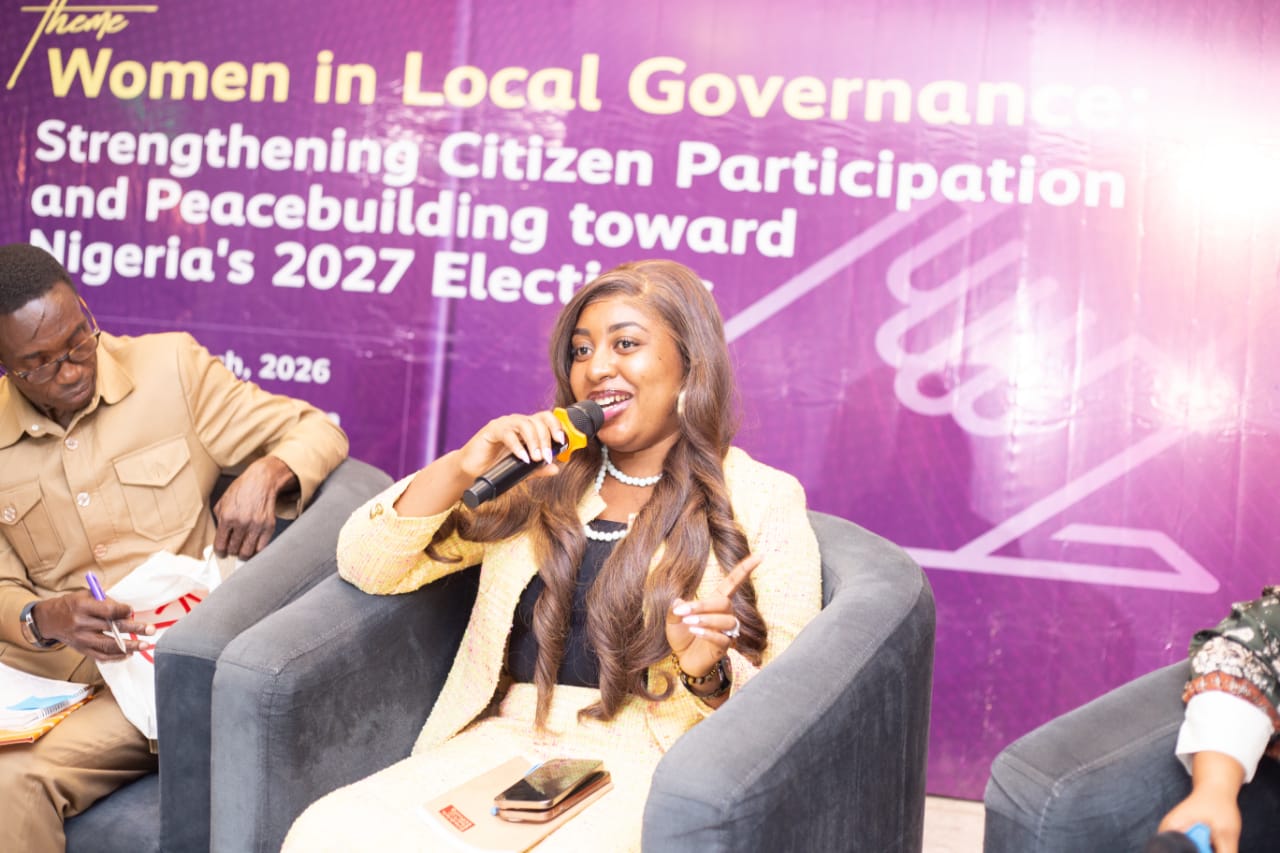
Enhancing Women's Participation in Nigerian Local Governance: A Policy Brief for Akwa Ibom State
This brief analyzes the severe underrepresentation of women in local governance in Akwa Ibom State, Nigeria, highlighting the disparity between their high voter turnout and low representation in elective office. It identifies key cultural, institutional, and psychological barriers and provides actionable policy recommendations, including legislative quotas and political party reforms, to achieve equitable representation ahead of the 2027 elections.
Strengthening Women’s Participation in Local Governance
Strategic pathways and actionable reforms ahead of Nigeria’s 2027 General Elections.
Published: March 2026
Executive Summary
Despite constituting nearly half of the voting population, Nigerian women remain severely underrepresented in local and state governance. Ahead of the 2027 elections, addressing this disparity requires moving beyond symbolic inclusion to enact structural, legal, and cultural reforms. This brief outlines the critical barriers to women’s political advancement at the grassroots level and provides actionable recommendations for legislators, political parties, and civil society organizations to ensure equitable representation and empower women as peacebuilders and decision-makers.
The Core Challenge
The stark contradiction in Nigeria's political landscape: women are heavily mobilized as voters but face systemic exclusion as candidates.
The Voter-to-Candidate Gap
Key Barriers to Political Participation
A complex web of factors drives the disparity between voter turnout and female representation.
Cultural & Legal
Discriminatory practices dictate that women lose their political identity or home-ward rights upon marrying outside their local government area, despite Nigerian legal precedents protecting a woman’s right to choose her political origin.
Institutional
Political party structures act as gatekeepers. Meetings are often scheduled at times that conflict with women's domestic responsibilities, and male-dominated hierarchies resist voluntarily ceding political space.
Interpersonal
The "scarcity mindset" limits transition to higher offices. A lack of structured, strategic mentorship means emerging female leaders are often viewed as threats rather than successors by established women in power.
Psychological
High prevalence of self-limiting beliefs. Women frequently self-select out of political spaces by demanding perfect qualifications of themselves or waiting for invitations, whereas male counterparts assume readiness.
Policy Recommendations for 2027
Targeted interventions are required to meaningfully improve women's representation.
To Legislators
- ⚖️ Establish a Local Governance Quota: Pass a bill for a 33–35% affirmative action quota for women in local governance.
- 📜 Ensure Substantive Representation: Define selection processes and power-sharing for reserved seats to avoid creating symbolic roles.
To Political Parties
- 🏛️ Mandate Inclusive Structures: Integrate women into core decision-making committees, not just auxiliary "women's wings".
- 🗓️ Adopt Equitable Scheduling: Ensure critical meetings and selection processes are held at times that accommodate women.
To Civil Society
- 📢 Launch an IEC Campaign: Educate communities that marriage does not strip a woman of her political rights in her home ward.
- 📈 Build Economic Power: Replace tokenism with sustainable structures like revolving loan schemes to build financial independence.
- 🎓 Provide Strategic Mentorship: Implement training on public speaking, legal literacy, and political strategy for female candidates.
Conclusion
Achieving gender parity in Nigerian local governance by 2027 is not merely a question of fairness; it is essential for effective peacebuilding and democratic legitimacy. Voluntary concessions from existing power structures are unlikely. Therefore, stakeholders must prioritize robust legal frameworks, aggressive civic education regarding women's rights, and the strategic integration of women into the core architecture of political parties.
The Time For Action Is Now
Based on the Dialogue Series convened by:
Young Professionals in Policy and Development (YouPaD)
In partnership with Friedrich-Ebert-Stiftung (FES) Nigeria & Akwa Ibom Female Councilors Forum